Before
Fractional Localization Operations
§ Senior ownership · monthly retainer
Localization run from the business goal down, and from the results back up.
I own your localization so every decision traces back to what the business needs from each market. I agree with leadership what good looks like, design how the work runs across your team and vendors, and hold a monthly review where what each release shows becomes the next decision. For software companies shipping in several languages, and the LSPs that serve them.
Let's talkMonthly retainer · Scoped to what you ship20+Years running localization operations
$1–2MA year, per enterprise tech account I ran end to end
63Lessons in the PM course I wrote and taught
For software companies
Localization designed into how you ship.
When international markets are part of the growth plan, localization ships with every release, across more markets and content types each year. Ownership often sits part-time with someone in product, marketing or engineering.
That's the seat I take, as your senior owner, often before a full-time one makes sense. I start with leadership on what each market is worth to the business and what quality each kind of content needs. Then I design how the work runs across your team, vendors and tools, run it with you on every release, and bring what each release shows back to the people setting direction.
What I own for you:
- Set market and quality priorities with leadership: which markets and content types matter most, and what good looks like for each.
- Design how the work runs: who does what across your team, your vendors and your tools, who makes which call, and who owns each locale.
- Choose and manage your vendors and linguists: sourced, onboarded and held to the standard we agreed, with their work reviewed against it.
- Keep terminology and tone consistent: translation memory, glossary and style guide looked after, so they hold across releases and languages.
- Build localization into your sprints: planned into your release cadence, so strings are ready when the build is.
- Decide where AI fits: machine translation where it earns its place, human review where it protects the product and the brand, and a clear line between the two.
- Bring back what each release shows: a monthly review of what shipped, what it cost, what's working and the decisions it calls for, for the people setting direction.

For LSPs serving software clients
Strategic partnership, built into the operation.
For an LSP serving software clients, project delivery is the baseline, and your team already delivers. The accounts that grow are the ones where the client trusts you to help its localization operation mature, and that trust comes from the operation itself: how each account is planned, how delivery keeps pace with the client's releases, and how what your team has learned across clients turns into judgment the client can use.
That's the capability I build with you, from the client's goals down to daily delivery and back. Every key account gets a plan and a regular read on what delivery shows, and daily delivery runs on a structure your leads own.
What I own for you:
- Plan each key account from the client's goals: a plan per account, reviewed monthly across delivery, quality, financial health, relationships and risk.
- Set the delivery rhythm: a production cadence matched to how each client ships.
- Agree who decides what: what a PM decides, what gets escalated and who makes the final call, agreed per account and visible to the whole team.
- Build the senior layer: PMs and leads who own daily delivery, with onboarding and SOPs the whole team works from.
- Set the quality standard and where AI fits: the standard written down per client and content type, the review model agreed, and machine translation used where it earns its place.
- Put what your team knows to work: what you learn across clients, captured as standards and brought into account planning. Never another client's data.
Where my judgment sits
Before the work, and after it.
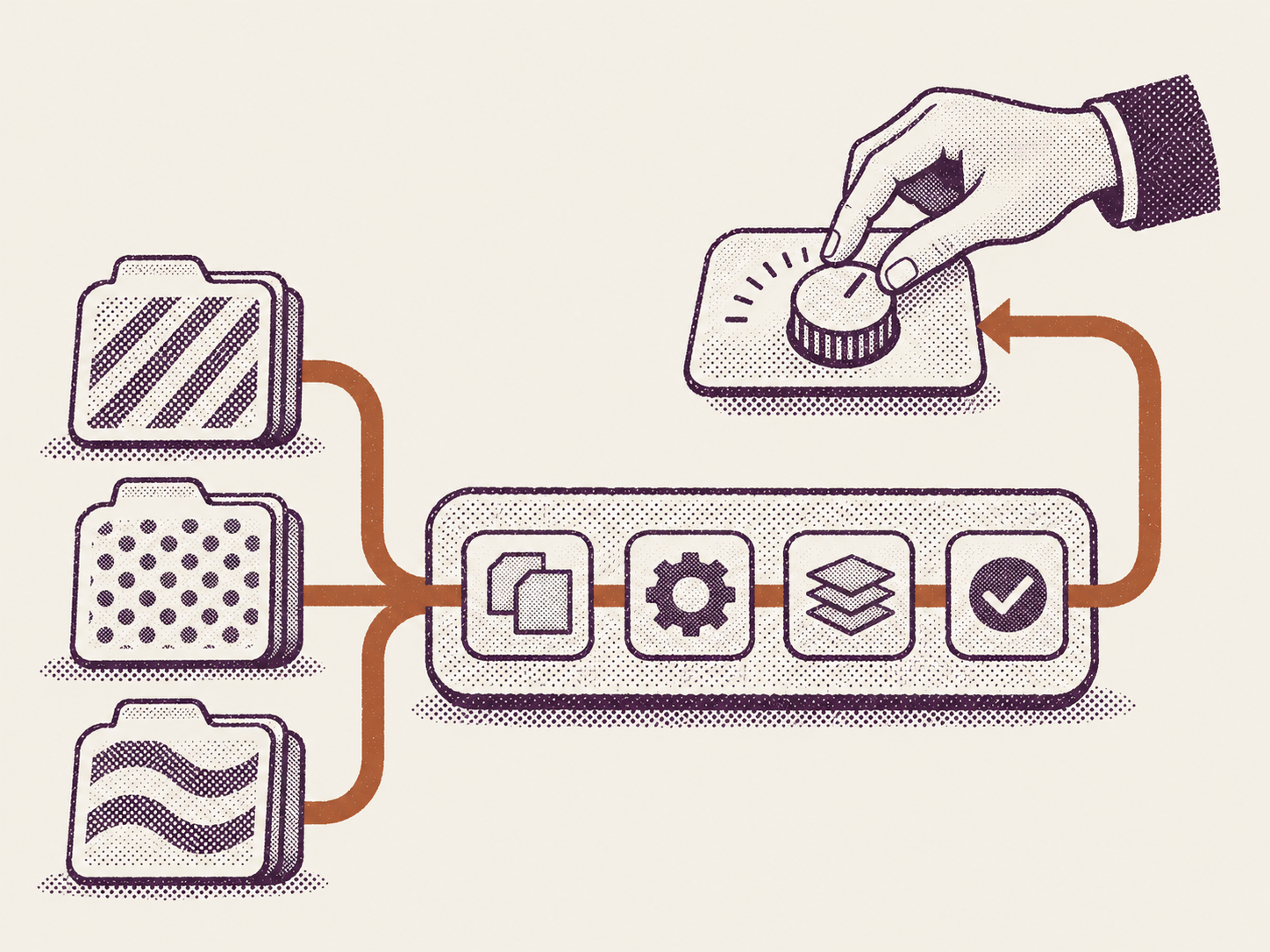
Most of my time goes into the two ends of the work. Before it, I agree with leadership what good looks like for each market, content type and release. After it, I read what comes back from reviewers, the numbers and your users, and turn it into decisions for the people setting direction.
Between the two, the work runs on a system your team owns, so it holds from one release to the next. Tools and AI work inside that system. Deciding what good looks like, and reading what comes back, stays with people.
After
What the evidence calls for next
How it works
Start with a call, then scope it together.
It starts with a conversation about what you ship, how localization runs today, and what the business needs from it next. From there we scope a monthly retainer together, around your markets, your volume, your release calendar and how much senior time the work needs. It flexes, so it can scale up around a launch or a major client onboarding and back down when things are steady, and we agree how long it runs before we start.
If the picture needs mapping first, we start with a short audit of about two weeks. I map how localization runs today against what the business needs from it, and you get the gaps ranked, a 90-day plan, and a clear recommendation on whether a retainer, a full-time hire, or neither is the right next step.
The architecture comes first, so it works inside the stack you already have, whether that's Crowdin, Lokalise, Phrase, Smartling, XTM, memoQ, Jira or a spreadsheet. For software teams, translator fees are billed to you directly, so the costs stay clean and easy to follow.
Investment
Priced on the scope of the work.
Every engagement is shaped differently, so there's no price list here. The fee follows the scope: how many markets and content types, how much volume, how fast you ship, and how much senior time the work needs. We set both together after the first call.
Why me
More than twenty years of pattern recognition.
I've spent more than twenty years in localization operations, all of it on the vendor side, including continuous localization for top-tier tech platforms. I ran enterprise tech accounts worth $1–2M a year end to end, over several years, and built the delivery rhythms, vendor benches and quality standards behind high-volume programs. I also co-founded a localization management SaaS and brought it to market, so I know the tooling from the inside.
That's the pattern recognition I bring: what to notice, what to question, what tends to break, and what to prepare for. If you run an LSP, I've sat where you sit, at enterprise scale. If you're a software company, I've spent those years serving companies like yours, so I know what your localization operation needs to give you, and what it takes to deliver it.
Writing
How I think about this work.
- Translation was never the bottleneckThree days at the GenAI in Localization Conference pointed to one thing: translation was never the slow part. What LSPs actually get paid for now.
- The problem isn't AI hallucinations. It's ops hallucinationsSoftware clients are shipping every two weeks. They expect L10n to be a pipeline stage, integrated, sprint-paced, in-context. Their LSPs are still running it as a project handoff.
- TM and glossaries aren't dying, they're becoming AI infrastructureTM, glossaries, and style guides are becoming the context that makes AI usable, and the judgment that keeps them performing is the part the tools can't hold.
Next step
Tell me what you ship, who owns it today, and what the business needs from it next.
One conversation. If I can help, I'll tell you exactly how. If you need a different solution, I'll tell you that too.
Reply within 3 working days